
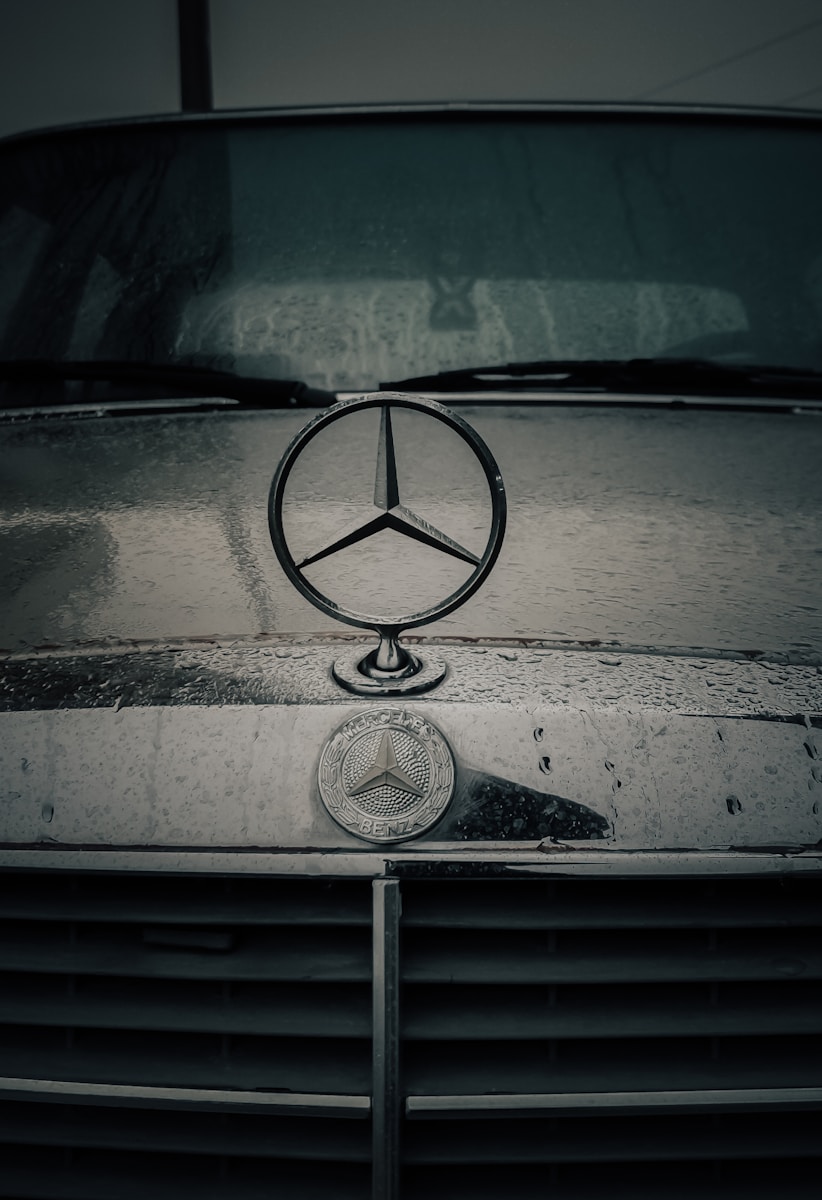
The history of the Mercedes car is not just the story of a brand, but the story of the automobile itself. Mercedes-Benz, often simply known as “Mercedes,” stands as one of the oldest and most prestigious automotive brands in the world. It has long been associated with quality engineering, luxury, and innovation. From the invention of the first gasoline-powered car in the 19th century to cutting-edge electric vehicles in the 21st century, the journey of Mercedes is a testament to human ingenuity, relentless pursuit of perfection, and a deep understanding of the relationship between technology and transportation. Today you can even get a Mercedes C63 with aftermarket C63 downpipes that are amazing.
1. The Birth of the Automobile (1886): Karl Benz and the Patent Motorwagen
The roots of Mercedes-Benz trace back to Karl Benz, a German engineer who is credited with inventing the first practical motor car. In 1886, Benz was granted a patent for his three-wheeled Motorwagen, which ran on a gasoline-powered internal combustion engine. This invention is widely considered to be the birth of the modern automobile.
At the same time, Gottlieb Daimler and Wilhelm Maybach, working independently, were developing their own version of the gasoline engine and a four-wheeled motor vehicle. Daimler’s innovations included the development of the high-speed petrol engine, which would go on to become a cornerstone of automotive design.
Though working separately, Benz and Daimler laid the technological and philosophical foundations of the modern car industry. Their companies, Benz & Cie. and Daimler-Motoren-Gesellschaft (DMG), would eventually merge to form Mercedes-Benz.
2. The Mercedes Name: Origins and Early Success
The name “Mercedes” comes from Mercedes Jellinek, the daughter of Emil Jellinek, a wealthy Austrian automobile dealer and businessman. Jellinek was passionate about automobiles and was a significant customer of DMG. In 1900, he commissioned a new, high-performance car to be named after his daughter — the Mercedes 35 HP.
This vehicle, designed by Wilhelm Maybach, is considered by many historians to be the first modern car. It featured a lightweight chassis, a powerful engine, and a low center of gravity. The Mercedes 35 HP debuted in 1901 and was a huge success, helping to establish the Mercedes brand as a leader in performance and innovation.
3. The Merger: Formation of Mercedes-Benz (1926)
The devastation of World War I had a massive impact on German industry. In the post-war period, both Benz & Cie. and DMG struggled to survive in a crippled economy. In 1926, the two companies merged to form Mercedes-Benz.
The merger created a powerful new entity that combined Benz’s legacy as the inventor of the automobile with Daimler’s engineering prowess. The new company adopted the iconic three-pointed star logo, representing Daimler’s vision of motorization “on land, on water, and in the air.”
From this point forward, Mercedes-Benz began producing a range of vehicles that would define the luxury and engineering standards of the automotive world.
4. Expansion and Innovation (1930s–1950s)
During the 1930s, Mercedes-Benz solidified its reputation for engineering excellence. The company produced a series of luxurious and technologically advanced cars, such as the Mercedes-Benz 770, famously used by heads of state — including Adolf Hitler, which would later associate the brand with unfortunate wartime symbolism.
Despite the Second World War causing destruction and halting civilian vehicle production, Mercedes-Benz pivoted to support the German war effort, producing military vehicles and aircraft engines. This decision, like many other German companies at the time, left a complex legacy.
Following the war, Mercedes-Benz resumed civilian production, focusing on rebuilding and modernization. The release of the Mercedes-Benz 300SL “Gullwing” in 1954 marked a return to global prestige. The 300SL was the fastest production car of its time and featured innovative technologies such as fuel injection and lightweight design — hallmarks of Mercedes’ commitment to cutting-edge engineering.
5. The Golden Era: Dominance in the 1960s–1980s
The post-war decades were a golden era for Mercedes-Benz. The company expanded globally and introduced a range of cars that defined automotive luxury and safety.
- Mercedes-Benz S-Class (initially launched in 1954 and continuously refined) became the benchmark for luxury sedans.
- Mercedes introduced numerous safety innovations including crumple zones, anti-lock braking systems (ABS), and airbags — many of which became industry standards.
- The brand also strengthened its reputation in motorsport, with strong performances in Formula One and rally racing, highlighting both the speed and durability of Mercedes engineering.
Throughout these decades, Mercedes-Benz became synonymous with prestige, reliability, and engineering excellence. Owning a Mercedes was a status symbol — a reflection of success and good taste.
6. The Modern Era: Global Expansion, Mergers, and Technological Shifts
In 1998, Mercedes-Benz’s parent company Daimler-Benz merged with the American auto giant Chrysler Corporation, forming DaimlerChrysler AG. The merger was initially seen as a bold move to create a global automotive powerhouse. However, the cultural and operational differences between the two companies led to challenges, and the merger ultimately dissolved in 2007.
Despite this, Mercedes-Benz continued to innovate and adapt. The 21st century brought new challenges: environmental concerns, increasing competition, and the rise of electric and autonomous vehicles.
Mercedes responded by:
- Introducing BlueTEC diesel engines with reduced emissions.
- Investing heavily in hybrid and electric vehicle (EV) technology.
- Launching the EQ sub-brand in 2016 for electric mobility. The Mercedes-Benz EQC marked the beginning of a new generation of electric Mercedes vehicles.
Mercedes also embraced digitalization, with features like:
- MBUX (Mercedes-Benz User Experience), a sophisticated infotainment system with voice control and AI.
- Advanced Driver-Assistance Systems (ADAS), contributing to semi-autonomous driving capabilities.
7. Mercedes-AMG and High-Performance Engineering
Since the late 1990s, Mercedes has collaborated with AMG, a performance and tuning subsidiary. Mercedes-AMG models have become legends in their own right, blending luxury with track-ready performance.
Vehicles like the AMG GT, C63 AMG, and E63 AMG compete with the best from BMW M, Audi RS, and Porsche. The Project One hypercar, featuring Formula One-derived hybrid technology, demonstrates Mercedes’ desire to push the boundaries of performance.
8. Mercedes in the 2020s and Beyond: Toward Sustainability and Autonomy
The 2020s have seen Mercedes-Benz embrace the future of mobility with bold strategies focused on sustainability, electrification, and autonomy. The EQS, an all-electric luxury sedan, showcases the brand’s commitment to EVs, featuring a futuristic design and the groundbreaking Hyperscreen dashboard.
Mercedes-Benz plans to go all-electric by the end of the decade, where market conditions allow, and has invested in battery technology, renewable energy, and global EV production facilities.
Autonomous driving is also on the horizon. Mercedes was one of the first companies to receive approval for Level 3 autonomous driving systems in Germany — a major step toward full self-driving capabilities.
Conclusion: A Century of Leadership
From the first gasoline-powered car to today’s AI-assisted electric vehicles, Mercedes-Benz has maintained a legacy of innovation, luxury, and excellence. It is not merely a car manufacturer, but a symbol of progress — blending tradition with futuristic thinking.
The Mercedes star continues to shine as a beacon of what’s possible when vision, technology, and craftsmanship come together. With its rich history and ambitious goals for the future, Mercedes-Benz remains not only a pioneer of the past but also a key architect of tomorrow’s mobility.